Digital transformation can sound expensive before a business has even decided what it needs to transform
The phrase suggests a large programme, a new architecture, and a long list of systems that must be replaced before value can be realised. For established engineering organisations, particularly those working with long-lived assets and regulated processes, this can make digitalisation feel unnecessarily difficult to begin.
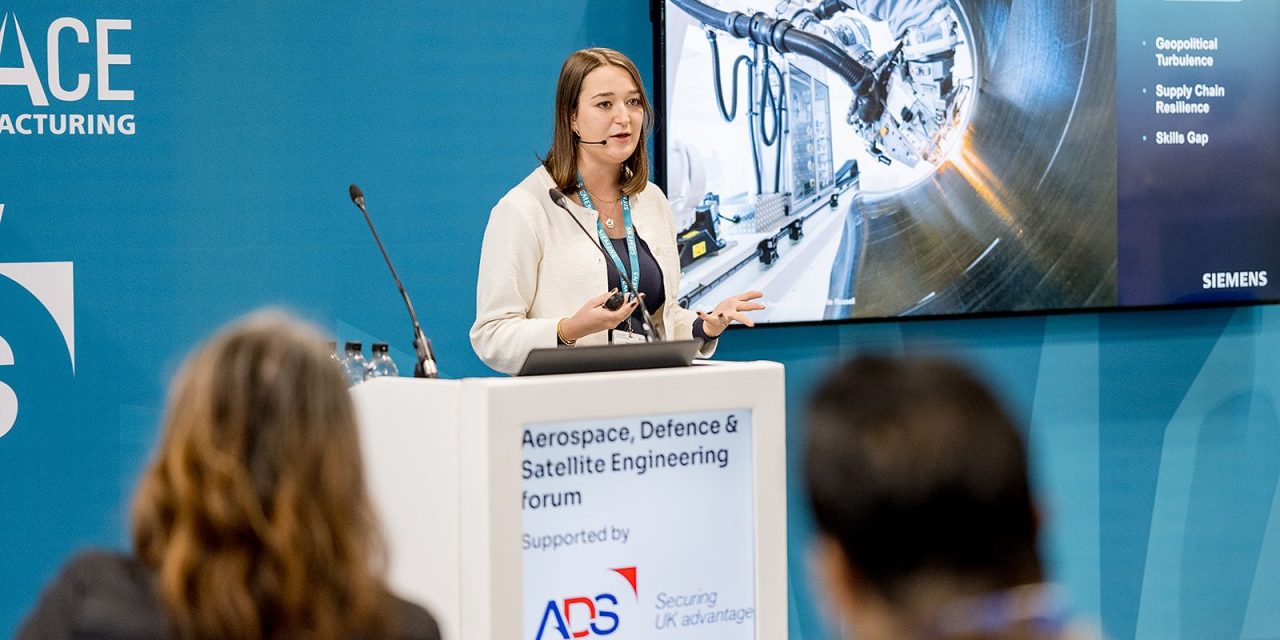
Isabelle Russell, UK Aerospace Account Manager at Siemens, offers a more practical way of looking at it. Speaking about the challenges facing aerospace and defence, she argues that digitalisation has an important role to play, but stresses that implementation does not have to be ‘all or nothing’.
That changes the starting point. Instead of asking how to digitise an entire business, an engineering team can ask where information currently breaks down. Which manual handover causes delay? Where is the same data entered twice? Which quality issue is discovered too late? Which asset fails without enough warning? Which engineering decision would improve if the right information were available earlier?

A small digital intervention can be valuable in its own right while also creating the foundation for something larger. Russell describes those interventions as the “little roadblocks along the way” that gradually build a digital architecture a company can work on.
The architecture matters because disconnected digital tools may create a new version of the problem they were meant to solve. A dashboard that cannot draw reliable data from the shop floor, a simulation model that is not linked to production reality or an AI tool operating on poorly structured information may add complexity rather than remove it. Incremental digitalisation, therefore, still needs direction. The difference is that the direction can be delivered through manageable use cases rather than a single high-risk transformation programme.
For engineering businesses, a sensible first project usually has three characteristics: the problem is understood, the data can be accessed, and the result can be measured. That could mean reducing inspection time, improving asset availability, giving production teams better visibility of work in progress or connecting engineering changes more effectively with manufacturing.
Once value is demonstrated, the next investment is easier to justify because the organisation is no longer buying digitalisation as an abstract concept. It is extending a capability that has already improved the operation. Just as importantly, the business has learned something about its own data, processes and implementation capacity, which reduces uncertainty around the next decision.
This approach also helps with skills and adoption. People learn new systems in the context of a real problem rather than being asked to change working practices because a corporate transformation programme says they should. Feedback comes earlier, implementation problems surface on a smaller scale, and the business begins to understand where standardisation matters.
The lesson is not that digital transformation should lack ambition. It is that ambition does not require every change to happen at once. For many engineering organisations, the strongest digital architecture will be built by solving one worthwhile problem, learning from it, and deliberately connecting the next improvement to what already works.
Advanced Engineering takes place at the NEC Birmingham on 4-5 November 2026, bringing together engineering, manufacturing, technology, and supply chain organisations from across the UK and beyond.
Registration is free for qualified engineering and manufacturing professionals. advancedengineeringuk.com
To read up on more of the most recent manufacturing coverage, take a look at Irish Manufacturing’s News Page